

Buying an investment property involves more than finding the right opportunity. How the purchase is financed can affect the cost, timing and overall viability of the deal.
Some of the most common problems arise before an application is even submitted: underestimating costs, choosing finance that does not match the project, or leaving too little time to complete the process.
Here are seven common mistakes UK property investors should avoid when arranging finance.
1. Underestimating the Full Cost of the Deal
The purchase price is only one part of a property investment. Legal fees, valuation costs, taxes, finance fees and renovation work can all add to the amount of capital required. Some properties may also need repairs or improvements before they can be rented, refinanced or sold. A common mistake is committing most of the available cash to the deposit without leaving enough for these additional costs.
Before applying for property finance, work out the expected cost of the deal as a whole and allow some room for unexpected expenses. This will give you a more realistic picture of how much capital you need and how much finance you may need to arrange.
2. Choosing the Wrong Type of Finance
Different property strategies have different funding needs.An investor buying a residential property to hold and rent may consider buy-to-let finance, while an auction purchase, refurbishment or development project may require a different approach.
Before comparing finance options, think about the property and what you plan to do with it. Are you buying to rent, renovate, refinance or sell? How long do you expect to hold it? Starting with the project rather than the product makes it easier to identify finance that fits the purpose and timescale of the investment.
3. Applying Without the Right Documents
Missing or incomplete information can slow down a property finance application.
The documents required for property finance will vary depending on the deal, but lenders may ask for information about your income, existing borrowing, source of deposit, the property and your investment experience. For rental properties, expected rental income may also form part of the assessment.
For instance, refurbishment or development projects may require additional information, such as project costs, proposed works and timescales. Having the relevant documents ready before you apply for property finance can reduce unnecessary back-and-forth and help lenders understand the deal more clearly.
4. Looking Only at the Interest Rate
A low interest rate can look attractive, but it does not necessarily mean a lower overall cost.
Property finance may also involve arrangement fees, valuation and legal costs, exit charges and other conditions. The length of the finance and any terms around early repayment or refinancing can also affect what you ultimately pay.
When comparing property finance options, look at the overall cost and structure of the finance rather than the headline rate alone.
5. Borrowing Without a Clear Property Plan
The finance you choose should reflect what you plan to do with the property. A property being purchased for long-term rental will have different funding needs from one being refurbished for resale or refinancing.
For short-term or time-sensitive transactions, bridging finance may be suitable for certain purchases, refurbishment projects or refinancing. However, the expected timescale and longer-term plan should be considered before finance is arranged.
Thinking about the next stage of the investment from the outset can help avoid having to restructure the finance later.
6. Having No Clear Exit Strategy
An exit strategy sets out how the finance will be repaid and is particularly important for short-term property finance.
Depending on the project, this might involve selling the property after refurbishment or refinancing onto longer-term funding. The plan should be realistic and take into account possible changes in costs, timescales, property value or rental income.
It is also worth considering a backup option in case the original exit does not go to plan. Thinking about the exit from the outset can help investors understand how the finance fits into the wider property strategy.
7. Leaving Finance Too Late
Arranging finance too close to completion can put unnecessary pressure on a property transaction.
Property finance may involve valuations, legal work, document checks and lender approval, so allowing enough time can help avoid preventable delays. This is particularly important for auction purchases, where completion deadlines are often shorter than in a standard property transaction.
If you are considering buying at auction, it is worth understanding your auction finance options before placing a bid.
Starting early does not mean committing to a finance agreement straight away. It simply gives you more time to prepare, compare your options and deal with any issues before completion.
A Simple Property Finance Checklist
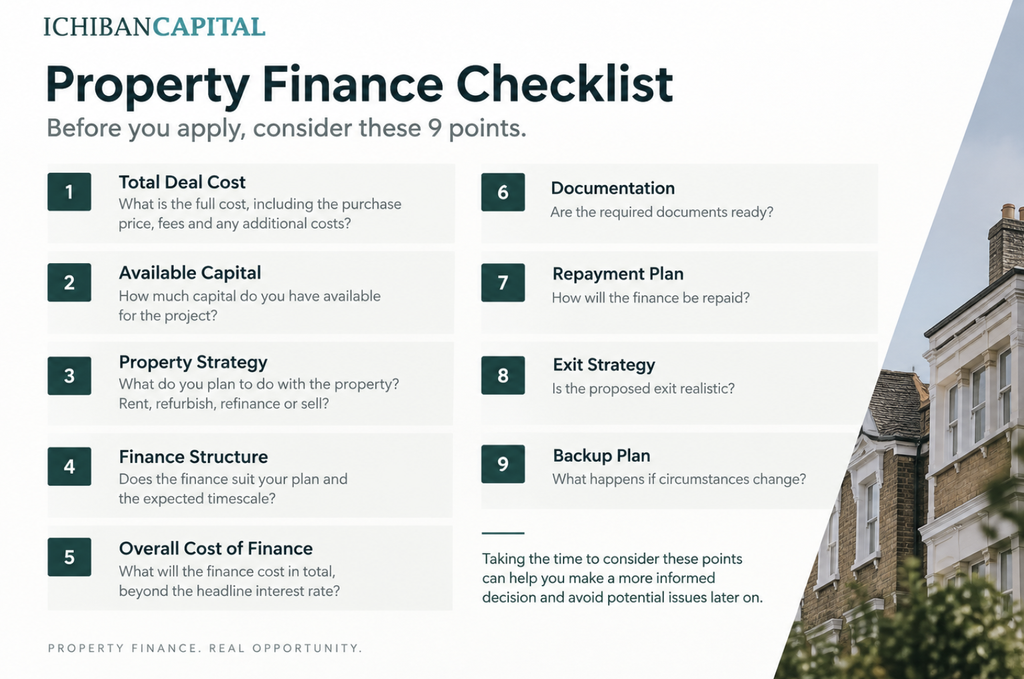
Before applying for property finance, consider:
- What is the total cost of the deal?
- How much capital do I have available?
- What do I plan to do with the property?
- Does the finance suit that plan and timescale?
- What will the finance cost be overall?
- Are the required documents ready?
- How will the finance be repaid?
- What is the exit strategy?
- Is there a backup plan if circumstances change?
Answering these questions before applying can help identify potential issues early and give you a clearer picture of the finance the project may require.
Before You Apply
Property finance should fit the property, your financial position and your wider investment plan.
Before applying, make sure you understand the full cost of the deal, have the relevant information ready and know how the finance will support your plans for the property. The structure, cost and timescale should all make sense for what you are trying to achieve.
Taking the time to prepare can make the application process easier to manage and reduce avoidable problems later.
C
What do lenders look at when assessing a property finance application?
This will depend on the type of finance, but lenders may consider the property itself, your financial position, the purpose of the funding and how the finance will be repaid. For investment properties, rental income or the wider project plan may also be relevant.
Can a property valuation affect my finance application?
Yes. The valuation can affect how much a lender is prepared to offer and may also highlight issues with the property that need further review. This is why the purchase price alone should not be used to judge how much finance may be available.
Can I change my property finance after an application has started?
It may be possible to change your finance arrangements after applying, but doing so can cause delays and may involve additional checks or costs. Where possible, consider your plans for the property, your timescale and how you intend to repay the finance before submitting your application.
What happens if my exit strategy changes?
Plans can change, particularly with refurbishment or short-term property projects. If a sale, refinance or other planned exit is delayed, it is important to review the position early rather than waiting until the finance term is close to ending.
Is the cheapest property finance option always the one with the lowest rate?
Not necessarily. Fees, the length of the finance, repayment terms and exit charges can all affect the overall cost. Comparing the full structure of the finance gives a more useful picture than comparing headline rates alone.