

Buying your first investment property is a significant financial decision. Finding a property with good rental potential is one part of the process, but understanding how to finance it is just as important.
For instance, you’ve found a property worth £200,000 and have £50,000 available for the deposit. With a 25% deposit, you might assume that securing a £150,000 buy-to-let mortgage will be straightforward. Lenders consider much more than the size of your deposit. Your experience as a property owner, the rental income the property could generate, its condition and your wider financial circumstances can all influence the finance available to you.
For first-time property investors in the UK, understanding these factors early can help prevent unexpected complications. This guide explains how UK property investment finance works, what lenders look for and how to approach your first investment with greater confidence.
Can You Get a Buy-to-Let Mortgage as a First-Time Investor?
One of the first questions new investors ask is whether they can obtain a buy-to-let mortgage without previous property investment experience. The answer is yes, although the options available may be more limited. Some lenders are willing to consider first-time landlords, while others prefer applicants who already own residential property or have experience managing rental investments.
An important distinction is the difference between a first-time landlord and a first-time buyer. A first-time landlord may already own their home but be purchasing a rental property for the first time. A first-time buyer, on the other hand, has never owned a property. This matters because lenders may assess these applicants differently. For example, some buy-to-let lenders accept homeowners who have never rented out a property before but may not consider applicants who have never owned property at all.
Other lenders may be more flexible, depending on the applicant’s income, deposit, credit history and the property itself. Being a first-time investor does not automatically prevent you from obtaining property finance but identifying lenders whose criteria match your circumstances is an important part of the process.
How Much Deposit Do You Need for Your First Investment Property?
For a typical buy-to-let mortgage in the UK, a deposit of around 25% is a useful starting point, although requirements vary between lenders and mortgage products.
Let’s return to our £200,000 investment property. If you contribute £50,000 towards the purchase and borrow the remaining £150,000, your mortgage represents 75% of the property’s value. This is known as a 75% Loan-to-Value (LTV) ratio.
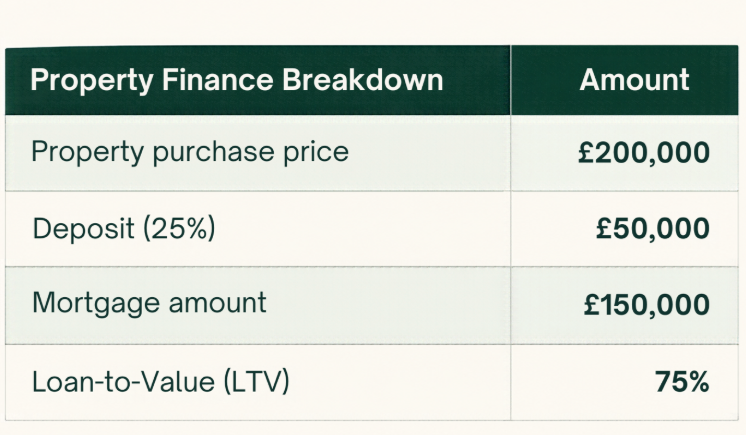
LTV is one of the key measures lenders use when assessing property finance applications. Generally, a lower LTV means the borrower is contributing a larger proportion of the property’s value, which can affect the range of mortgage products and interest rates available. However, having a 25% deposit does not necessarily mean a lender will approve a mortgage covering the remaining 75%.
Why Your Deposit Isn’t the Only Factor
For buy-to-let mortgages, lenders also consider whether the property’s expected rental income is sufficient to support the borrowing. Many lenders use an Interest Coverage Ratio (ICR) to assess whether the rent provides sufficient coverage for the mortgage interest. They may also apply a stress rate, which is a rate used for affordability calculations rather than necessarily the interest rate you will actually pay.
For example, suppose a lender assesses a proposed £150,000 interest-only mortgage using a 5.5% annual stress rate and an ICR requirement of 125%. The annual stressed interest would be £8,250. Applying the 125% coverage requirement means the property would need to generate approximately £10,313 in annual rent, equivalent to around £859 per month.
This is an illustrative calculation rather than a universal lending requirement. Actual stress rates, ICR thresholds and assessment methods vary between lenders and may depend on factors such as the applicant’s tax position and mortgage product. The important takeaway is that the amount you can borrow may depend on the property’s rental potential, not simply how much deposit you have saved.
Don’t Forget the Costs Beyond Your Deposit
Another common mistake among first-time property investors is focusing on the deposit without accounting for the other costs involved in purchasing and owning an investment property. Returning to our £200,000 example, the £50,000 deposit is only part of the initial financial commitment.
Depending on the transaction, additional costs may include Stamp Duty or other property transaction taxes, mortgage arrangement fees, valuation charges, legal and conveyancing costs, and any refurbishment work required. Investors should also consider ongoing expenses such as insurance, maintenance and periods without tenants. Having a contingency fund can help cover unexpected costs without placing unnecessary pressure on cash flow.
Property transaction taxes deserve particular attention. In England and Northern Ireland, Stamp Duty Land Tax (SDLT) rules differ depending on the property’s use and the buyer’s circumstances. Scotland and Wales operate separate property transaction tax systems. First-time buyer relief should not be assumed to apply to a property purchased for investment purposes.
Before proceeding, it is worth calculating the full amount of capital required rather than working backwards from the deposit alone. A property that appears affordable based on its purchase price may require considerably more upfront funding once these additional costs are included.
Which Type of Property Finance Is Right for Your Investment?
Not every property investment is suited to a standard buy-to-let mortgage. The most appropriate funding option depends on what you intend to do with the property, its current condition and how long you expect to hold it.
Buy-to-Let Mortgages: For Properties You Plan to Rent Out
A buy-to-let mortgage is generally designed for properties purchased with the intention of generating rental income. It may be suitable if you are buying a property that meets the lender’s requirements and intend to hold it as a longer-term investment. Lenders typically assess the property’s rental potential alongside the applicant’s financial circumstances.
For first-time landlords, eligibility requirements can vary considerably. Some lenders may require applicants to own their residential home, while others may consider first-time buyers under specific circumstances. If your plan is to purchase a property and rent it out over several years, a buy-to-let mortgage may be one of the first financing options to explore.
Bridging Finance: For Purchases Requiring Short-Term Funding
What happens if the property you want to buy is not currently suitable for a standard mortgage? For example, you might find a discounted property requiring substantial refurbishment before it can be rented out. A conventional buy-to-let lender may be unwilling to finance the property in its current condition. In situations like this, bridging finance may provide an alternative.
Bridging loans are short-term funding arrangements commonly used for property purchases, refinancing and certain refurbishment projects. They may also be considered when a transaction needs to complete within a relatively short timeframe. However, bridging finance works differently from a traditional mortgage. Interest may be charged monthly, and the overall cost of borrowing can include arrangement fees, valuation costs and other charges.
Most importantly, the borrower needs a credible exit strategy. This is the planned method of repaying the loan, commonly through selling the property or refinancing onto longer-term finance. For example, an investor might purchase a property using bridging finance, complete the necessary refurbishment and then seek to refinance onto a buy-to-let mortgage once the property meets the relevant lending criteria. That refinancing is not guaranteed, so the viability of the exit strategy should be considered carefully before taking out the initial loan.
Auction Finance: When Completion Deadlines Are Tight
Property auctions can attract investors looking for opportunities outside the traditional property market. However, buying at auction comes with an important consideration: completion deadlines. Successful bidders are often required to complete within a relatively short period, commonly around 28 days, although the exact terms depend on the auction contract.
This can make arranging a conventional mortgage challenging. Auction finance, often structured using bridging finance, may help eligible investors meet these deadlines. Before bidding, investors should understand the auction’s legal conditions, assess the property’s suitability for finance and establish whether the necessary funding can realistically be arranged.
Development Finance: For Larger Property Projects
If your investment involves substantial construction, conversion or development work, development finance may be more appropriate. Unlike a standard buy-to-let mortgage, development finance is structured around the costs and progress of a project. Lenders may consider factors such as the development budget, planning position, projected completed value, borrower experience and proposed repayment strategy.
Funding may be released in stages as work progresses. For first-time investors, development finance can involve additional complexity, and some lenders may require previous development experience. Understanding these differences can help you avoid applying for a finance product that does not match your investment plans.
Why the Lowest Interest Rate Isn’t Always the Cheapest Option
When comparing property finance products, it is tempting to focus on the advertised interest rate. After all, a lower rate should mean cheaper borrowing, shouldn’t it? Not necessarily. The total cost of finance depends on several factors, including the interest rate, fees, loan term and repayment structure.
Consider two hypothetical mortgage products for a £150,000 loan:
| Mortgage A | Mortgage B | |
|---|---|---|
| Interest rate | 4.50% | 4.75% |
| Arrangement fee | 3% | 1% |
| Arrangement fee amount | £4,500 | £1,500 |
Mortgage A offers a lower interest rate, but its arrangement fee is £3,000 higher. Assuming both mortgages are interest-only, the difference in annual interest at these rates would be £375. Over an illustrative two-year period, Mortgage A would save £750 in interest compared with Mortgage B, before accounting for any other differences. However, its higher arrangement fee would more than offset that saving.
This simplified example excludes other charges and assumes the stated rates remain unchanged over the comparison period. It is intended to illustrate why looking at the headline rate alone can be misleading. Depending on the mortgage product, other considerations may include valuation fees, broker fees, early repayment charges and what happens when an initial fixed-rate period ends.
The cheapest-looking rate is not necessarily the most cost-effective finance arrangement for your investment. Comparing the overall borrowing costs is particularly important when you have a specific investment timeline or expect to refinance in the future.
What Do Lenders Look for in a First-Time Property Investor?
Once you have identified a suitable property and finance option, the next step is understanding what lenders will assess. Although requirements differ, lenders commonly consider your financial position, the property’s condition and value, its expected rental income and your investment plans.
Your financial position may include your income, existing commitments, credit history and the source of your deposit. Some lenders have minimum income requirements, while others place greater emphasis on rental income and the wider application. A lender will also usually require a property valuation and assess whether the building meets its lending criteria. Certain property types or properties requiring significant work may be unsuitable for standard mortgage products.
For buy-to-let applications, lenders will normally assess the rent the property could reasonably achieve, which may influence the maximum loan available. They may also distinguish between experienced landlords, first-time landlords and applicants who have never owned a property. For specialist or short-term finance, the proposed investment strategy and repayment plan can be particularly important.
Preparing this information early can help you identify potential issues before they delay the transaction. It may also help you narrow down which financing options are worth exploring.
Three Questions to Ask Before Applying for Property Finance
Before submitting an application, it is worth considering three questions that can help you assess whether the proposed investment and finance arrangement are suitable for your circumstances.
1. Can I Afford the Property Beyond the Initial Purchase?
A property investment involves ongoing costs, not just the deposit and mortgage payments. Insurance, maintenance, potential letting and management fees, periods without rental income and unexpected repairs can all affect your returns. A realistic budget should account for these expenses rather than assuming every month will generate the same income.
2. Does My Finance Match My Investment Strategy?
If you intend to hold a property for several years, your priorities may be different from those of an investor planning to refurbish and sell within a few months. The type of loan, its term and repayment conditions should reflect how you plan to use the property. For short-term borrowing in particular, the exit strategy needs careful consideration.
3. Have I Compared the Overall Cost of Borrowing?
Two finance products with similar interest rates can have very different overall costs. Before choosing a product, consider the arrangement fees, repayment conditions and other charges alongside the headline rate. Understanding these details can help you make a more informed decision and avoid unexpected costs later.
How Ichiban Capital Can Help
For first-time property investors, one of the challenges is understanding which lenders and finance products may be suitable for their circumstances. Different lenders have different criteria, and the options available can depend on factors such as property ownership history, rental income, deposit size and the intended use of the property.
At Ichiban Capital, we help clients explore specialist property finance options, including buy-to-let mortgages, bridging finance and funding for more complex property transactions. By working with a network of lenders and finance providers, we can help investors understand potential funding routes and compare options based on their investment plans.
Whether you are purchasing your first rental property or considering a refurbishment project, understanding the available finance before committing to a purchase can help you plan more effectively.
Frequently Asked Questions
Can I get a buy-to-let mortgage if I've never owned a property
Yes, some lenders consider applicants who have never owned property. However, lender criteria vary, and the available options may be more limited than for applicants who already own a residential property.
How much deposit do I need for my first buy-to-let property?
A deposit of around 25% is a common starting point for buy-to-let finance, although some lenders may require more or less. The deposit requirement depends on the lender, mortgage product, property and applicant's circumstances.
Can I get a buy-to-let mortgage with a low credit score?
Some specialist lenders consider applicants with previous credit issues. The type, severity and timing of those issues can influence eligibility, alongside other factors such as income, deposit and property details.
Is bridging finance suitable for first-time property investors?
Bridging finance may be suitable in certain circumstances, such as purchasing a property requiring refurbishment or meeting a short completion deadline. However, borrowers need to understand the costs, risks and repayment strategy before proceeding.
Can I purchase my first investment property through a limited company?
Yes, some lenders offer buy-to-let finance to limited companies, including special purpose vehicles (SPVs). However, lending criteria and tax considerations can differ from purchasing in a personal name. Independent tax advice may be appropriate before deciding on an ownership structure.
How long does it take to arrange property investment finance?
Timescales vary depending on the type of finance, lender requirements, valuation and legal process. Conventional buy-to-let mortgage applications may take several weeks, while certain specialist finance arrangements may be completed more quickly where circumstances allow.